<?xml version="1.0" encoding="utf-8"?><feed xmlns="http://www.w3.org/2005/Atom" ><generator uri="https://jekyllrb.com/" version="3.10.0">Jekyll</generator><link href="https://the-cmp-branch.github.io/News/feed.xml" rel="self" type="application/atom+xml" /><link href="https://the-cmp-branch.github.io/News/" rel="alternate" type="text/html" /><updated>2026-11-28T08:26:51+00:00</updated><id>https://the-cmp-branch.github.io/News/feed.xml</id><title type="html">The CMP Branch — RISC OS News</title><subtitle>Community news and updates from the RISC OS world</subtitle><entry><title type="html">Andrew Youll round-up: OpenTTD 15.3, RISC OS on Linux 1.0.0093 images, RISC3D, GTK and Folio updates</title><link href="https://the-cmp-branch.github.io/News/2026/11/28/andrew-youll-round-up-openttd-rol-risc3d-folio/" rel="alternate" type="text/html" title="Andrew Youll round-up: OpenTTD 15.3, RISC OS on Linux 1.0.0093 images, RISC3D, GTK and Folio updates" /><published>2026-11-28T08:00:00+00:00</published><updated>2026-11-28T08:00:00+00:00</updated><id>https://the-cmp-branch.github.io/News/2026/11/28/andrew-youll-round-up-openttd-rol-risc3d-folio</id><content type="html" xml:base="https://the-cmp-branch.github.io/News/2026/11/28/andrew-youll-round-up-openttd-rol-risc3d-folio/"><![CDATA[<p>This is a combined round-up of Andrew Youll’s updates from 25–27 November 2026, grouped by project. The announcements were posted in the RISC OS Open Announcements forum, with matching GitHub releases. It follows this site’s <a href="/News/2026/11/25/andrew-youll-round-up-risc3d-folio-lumen-groove/">round-up of 22–25 November</a>.</p>

<h2 id="openttd">OpenTTD</h2>

<p>Posted on 27 November in <a href="https://www.riscosopen.org/forum/forums/1/topics/20560">!OpenTTD 14.1 Port</a>, with the GitHub release <a href="https://github.com/adyoull/riscos-openttd/releases/tag/15.3.1">OpenTTD 15.3 for RISC OS</a>.</p>

<p>The RISC OS port moves from 14.1 to 15.3, the current OpenTTD stable. That brings the upstream 15.0–15.3 work, including maps with water beyond their edges, bridges over stations, waypoint improvements, and many interface changes.</p>

<p>The window and icon bar icon now appear within a few seconds, with a small “Loading OpenTTD, please wait…” box until the title screen is ready. The desktop keeps running while the game loads.</p>

<p>OpenTTD 15 needs newer C++ than GCC 10 had, so this build uses GCC 16.2 from the optional toolchain in riscos-crossdev 1.14, with UnixLib 5.0.3.12. The window is the right size in alpha-channel desktop modes, and it works in desktops of fewer than 32 bits per pixel.</p>

<p>Through Youll’s PackMan source (<code class="language-plaintext highlighter-rouge">https://adyoull.github.io/riscos-packages/pkg/index</code>) it shows as OpenTTD 15.3.0.1-1. The OpenTTD-OpenSFX and OpenTTD-OpenMSX packages are unchanged. 15.3 loads games saved by 14.1, but 14.1 cannot load 15.3 saves, so keep a copy of any save you might want to take back. Network games need the same version.</p>

<p>As before, you need ARMEABISupport and SharedUnixLibrary from PackMan. For sound, StreamManager and SharedSoundBuffer (John Duffell’s freeware) are required.</p>

<h2 id="risc-os-on-linux">RISC OS on Linux</h2>

<p>These updates were posted in <a href="https://www.riscosopen.org/forum/forums/1/topics/20657">Updated RISC OS on Linux</a>.</p>

<p>On 25 November afternoon, Configure &gt; Updates brought printing through Linux’s CUPS (Configure &gt; Linux printing), faster downloads, a working Ping, ShareFS and Freeway, USB joysticks and gamepads, RISC3D 0.10 and MesaLibs 20.3.5-23 on the disc, and riscos-rom 5.31-32.</p>

<p>That evening, ShareFS’s Discs icon was fixed when the network comes up after the desktop — as it can on a Pi 5 starting from NVMe, or on Wi-Fi (riscos-harddisc 1.0.0076-1). Configure &gt; Linux printing now shows ink and toner levels, and the printer you choose stays in CUPS’s own web pages.</p>

<p>On 26 November, Updates no longer runs out of memory on a large first update (riscos-harddisc 1.0.0078-1, thanks to David Pitt). It now has 1 MB. If an older Updates stops with “No room for function/procedure call” or “Too many nested structures”, raise its WimpSlot once: Shift-double-click !Boot, open Resources then Configure, Shift-double-click !ROLUpdate, and change the <code class="language-plaintext highlighter-rouge">WimpSlot</code> line in <code class="language-plaintext highlighter-rouge">!Run</code> to <code class="language-plaintext highlighter-rouge">WimpSlot -min 1024k -max 1024k</code>. That update brings the fixed Updates, so you only need to do this once. Updates 1.04 (riscos-harddisc 1.0.0079-1) then updates itself and the Linux side first, restarts where it was, and installs the rest. Printing is no longer removed by a later update (riscos-support 1.0.0091-1).</p>

<p>On 27 November Youll published new <a href="https://github.com/adyoull/RISCOSonLinux/releases/tag/1.0.0093">1.0.0093 images</a>: generic (Pi 3/4/5, 400/500, Compute Modules, Zero 2 W, UEFI machines and Pinebooks), UTM for Apple Silicon Macs, and the Windows Dev Kit 2023. They include RISC OS 5.31-33, CUPS printing and RISC3D 0.25. Existing installs reach the same through Configure &gt; Updates. They have only been tried under emulation so far; reports from real machines are welcome.</p>

<p>From David Sharp’s testing: Dismount hands a RISC OS-format USB stick or card back to Linux so it is safe to remove; a small Pi card image written to a larger card is now seen as RISC OS’s; abort handlers can restore DFAR, DFSR, IFAR and IFSR (which had left GCC 10 programs stopping with an EMT trap); and a file whose RISC OS type cannot be read no longer breaks its directory (RISC OS 5.31-33).</p>

<h2 id="risc3d">RISC3D</h2>

<p>Posted in <a href="https://www.riscosopen.org/forum/forums/1/topics/20678">RISC3D: 3D acceleration for RISC OS on Linux and RISC OS on the Pi 4</a>.</p>

<p><a href="https://github.com/adyoull/riscos-risc3d/releases/tag/v0.22">RISC3D 0.22</a> (25 November evening; 0.19–0.21 were unpublished) adds a tick box on Configure’s RISC3D page to draw the desktop’s copies and fills on the GPU. It is applied at once and kept; it remains off by default.</p>

<p><a href="https://github.com/adyoull/riscos-risc3d/releases/tag/v0.25">RISC3D 0.25</a> (<code class="language-plaintext highlighter-rouge">!RISC3D</code> 0.11-5), announced in the RISC OS on Linux topic on 27 November: a program’s 3D contexts last until it ends, so one that runs a <code class="language-plaintext highlighter-rouge">*command</code> keeps them. Configure’s RISC3D page shows the driver’s version. The Linux side (0.23-1) lets contexts share their objects, one per thread, for programs such as web browsers.</p>

<h2 id="gtk">GTK</h2>

<p>Posted in the <a href="https://www.riscosopen.org/forum/forums/1/topics/20588">GTK 3.24.41</a> topic on 25 November evening.</p>

<p><a href="https://github.com/adyoull/riscos-gtk/releases/tag/gtklibs-3.24.52-33"><code class="language-plaintext highlighter-rouge">!GTKLibs</code> 3.24.52-33</a> is for every GTK program; none of them needs updating for it. Youll profiled it on a Pi 4 under RISC OS itself. Fonts are given to fontconfig as one cached folder instead of being re-read one by one at every start, and GTK draws straight into each window’s off-screen picture. A test window went from 3.7 s to 0.4 s from the second start on, and scrolling from 70 to 80 steps a second. The first start after installing still builds the caches.</p>

<h2 id="folio">Folio</h2>

<p>Posted in <a href="https://www.riscosopen.org/forum/forums/1/topics/20590">Folio: a PDF and ebook reader for the desktop</a> on 25 November evening.</p>

<p><a href="https://github.com/adyoull/riscos-folio/releases/tag/v0.0.1-test78">0.0.1-test78</a> adds a Pictures choice to Export as Draw: As in the PDF, 150 dpi, or 90 dpi. The lower settings shrink finer scans by averaging pixels, so thin lines stay whole in Draw. Download <a href="https://github.com/adyoull/riscos-folio/releases/download/v0.0.1-test78/Folio-0.0.1-test78.zip">Folio-0.0.1-test78.zip</a>. There is a matching RiscPC zip.</p>

<h2 id="reel--ffmpeg">Reel / FFmpeg</h2>

<p>Posted on 26 November in <a href="https://www.riscosopen.org/forum/forums/1/topics/20565">!FFmpeg 5.1.10 LTS &amp; New Video Player !Reel &amp; !ReelEGL</a>.</p>

<p><a href="https://github.com/adyoull/riscos-ffmpeg/releases/tag/reel-0.1.32">Reel 0.1.32</a> and <a href="https://github.com/adyoull/riscos-ffmpeg/releases/tag/v5.1.10-riscos25">FFmpeg 5.1.10 riscos25</a> are rebuilt with UnixLib 5.0.3.12. RISC OS Open had already allocated <code class="language-plaintext highlighter-rouge">!FFmpeg</code> and <code class="language-plaintext highlighter-rouge">*ffmpeg</code>, so the application is now <code class="language-plaintext highlighter-rouge">!FFmpeg5</code> (<code class="language-plaintext highlighter-rouge">*ffmpeg5</code>). A fix covers files that stop short of their end: a large MKV on a NAS through LanMan98 could stop part-way through, because LanMan98 cannot read past 2 GB. In PackMan they are Reel 0.1.32.0.1-1 (with <code class="language-plaintext highlighter-rouge">!ReelEGL</code>) and FFmpeg 5.1.10.0.25-1.</p>]]></content><author><name></name></author><category term="andrew-youll" /><category term="round-up" /><category term="software" /><category term="development" /><summary type="html"><![CDATA[This is a combined round-up of Andrew Youll’s updates from 25–27 November 2026, grouped by project. The announcements were posted in the RISC OS Open Announcements forum, with matching GitHub releases. It follows this site’s round-up of 22–25 November.]]></summary></entry><entry><title type="html">Desk C Library Updated to 3.3.0 and Rehomed</title><link href="https://the-cmp-branch.github.io/News/2026/11/27/desk-3-3-0-library-rehomed/" rel="alternate" type="text/html" title="Desk C Library Updated to 3.3.0 and Rehomed" /><published>2026-11-27T17:00:00+00:00</published><updated>2026-11-27T17:00:00+00:00</updated><id>https://the-cmp-branch.github.io/News/2026/11/27/desk-3-3-0-library-rehomed</id><content type="html" xml:base="https://the-cmp-branch.github.io/News/2026/11/27/desk-3-3-0-library-rehomed/"><![CDATA[<p>The Desk library for RISC OS C programs has been updated to version 3.3.0 and published from a new home. <a href="https://www.riscository.com/2026/desk-updated-rehomed/">RISCOSitory reported the news</a> on 27 November 2026, in VinceH’s article <a href="https://www.riscository.com/2026/desk-updated-rehomed/">Desk updated and rehomed</a>. The sources now live in Philip Ludlam’s <a href="https://gitlab.com/philipnet/desk">Desk project on GitLab</a>.</p>

<p>Desk dates back to the early 1990s and has had many contributors over the years. RISCOSitory describes it as a library of functions for C programs, covering debugging, the desktop, file and memory management, sprites, internationalisation, graphics and sound, and fonts.</p>

<p>The server that hosted its sources went offline a few years ago. It has since been updated and made available from the GitLab project. Sources and <a href="https://gitlab.com/philipnet/desk/-/releases">pre-built binaries</a> are covered by the MIT licence and can be downloaded for linking with modules or applications.</p>

<h2 id="getting-desk-330">Getting Desk 3.3.0</h2>

<p>The GitLab <a href="https://gitlab.com/philipnet/desk/-/tags">tags</a> list <code class="language-plaintext highlighter-rouge">Desk-3.3.0</code>, with the associated release titled “Desk 3.3.0 for RISC OS”. The previous tag is <code class="language-plaintext highlighter-rouge">Desk-3.2.5</code>. The <a href="https://gitlab.com/philipnet/desk/-/releases/Desk-3.3.0">3.3.0 release page</a> includes a pre-built zip, <code class="language-plaintext highlighter-rouge">Desk-Release-3_3_0.zip</code>, along with source archives.</p>

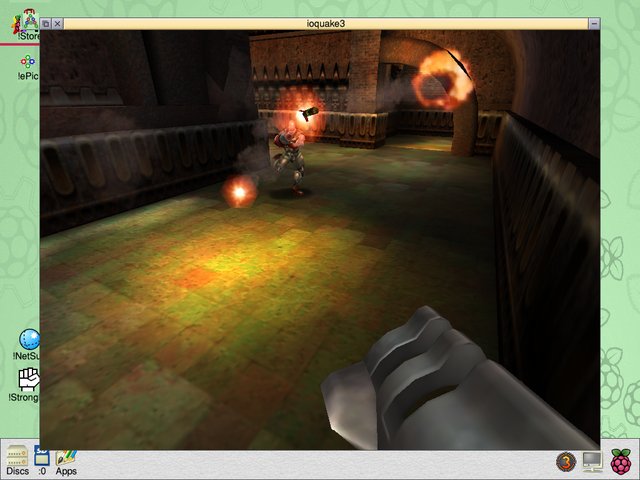
<p>RISC OS Open’s <a href="https://www.riscosopen.org/content/documents/risc-os-moonshots/64-bit-moonshot-technical">64-bit Moonshot technical page</a> had listed a job “Desk sources are lost”, noting that some otherwise C-based components could not be rebuilt for 64-bit platforms without the library, and that this Desk is not the same as DeskLib. Later notes on that page say the maintainer located the sources, an OSS-recognised licence was selected, and the sources were rebuilt using contemporary tools.</p>]]></content><author><name></name></author><category term="software" /><category term="development" /><summary type="html"><![CDATA[The Desk library for RISC OS C programs has been updated to version 3.3.0 and published from a new home. RISCOSitory reported the news on 27 November 2026, in VinceH’s article Desk updated and rehomed. The sources now live in Philip Ludlam’s Desk project on GitLab.]]></summary></entry><entry><title type="html">Quake III Arena and Doom 3 Ported to RISC OS with GPU Acceleration via RISC3D</title><link href="https://the-cmp-branch.github.io/News/2026/11/27/quake-3-doom-3-risc-os-risc3d/" rel="alternate" type="text/html" title="Quake III Arena and Doom 3 Ported to RISC OS with GPU Acceleration via RISC3D" /><published>2026-11-27T08:00:00+00:00</published><updated>2026-11-27T08:00:00+00:00</updated><id>https://the-cmp-branch.github.io/News/2026/11/27/quake-3-doom-3-risc-os-risc3d</id><content type="html" xml:base="https://the-cmp-branch.github.io/News/2026/11/27/quake-3-doom-3-risc-os-risc3d/"><![CDATA[<p>David Sharp announced on 27 November 2026, in the RISC OS Open Announcements topic <a href="https://www.riscosopen.org/forum/forums/1/topics/20687">Quake 3 and Doom 3 on RISC OS with GPU acceleration via RISC3D</a>, that he has ported two of id Software’s engines to RISC OS: <a href="https://davidsharp.com/riscos/quake3/">ioquake3</a> (Quake III Arena, id Tech 3, 1999) and <a href="https://davidsharp.com/riscos/doom3/">dhewm3</a> (Doom 3, id Tech 4, 2004). He states that the ports were made with the help of Claude AI.</p>

<p>On a Raspberry Pi 4 with Andrew Youll’s <a href="/News/2026/11/17/risc3d-0-10-gpu-opengl-classicube/">RISC3D</a>, both games are drawn by the GPU, in a window on the desktop or full screen. Neither package includes game data. Each one can download id Software’s free demo, or use data from a copy of the full game that you already own.</p>

<h2 id="quake-iii-arena">Quake III Arena</h2>

<p>The <a href="https://davidsharp.com/riscos/quake3/">Quake III Arena home page</a> lists version 0.2.1 as an 8.8 MB zip. It has the game’s own menus, single player against bots, and LAN and internet play. Alt+Enter switches between full screen and a window.</p>

<p>On a Pi 4 with RISC3D, Sharp reports about 70 frames a second in a 1024×768 window and about 45 full screen at 1680×1050. Without RISC3D it also runs on a Pi 2, 3 or 4, drawn in software at a lower resolution and scaled up to fill the screen.</p>

<p>It needs RISC OS 5 (tested on 5.30), SharedUnixLibrary 1.16 or later, and ARMEABISupport 1.03 or later. GPU drawing needs RISC3D 0.22 or later on a Pi 4. Sound is through SharedSoundBuffer or DigitalRenderer. Source is in the <a href="https://github.com/davidpsharp/riscos-quake3">riscos-quake3</a> GitHub repository.</p>

<p><a href="/News/assets/images/quake3-pi4-rocket-fight.jpg"><img src="/News/assets/images/quake3-pi4-rocket-fight.jpg" alt="A bot firing rockets down a corridor in q3dm7, from a Quake III Arena bot match on a Raspberry Pi 4" width="640" height="480" loading="lazy" /></a></p>

<p><em>A bot match on a Raspberry Pi 4, drawn by its GPU through RISC3D. Image: <a href="https://davidsharp.com/riscos/quake3/">davidsharp.com</a>.</em></p>

<h2 id="doom-3">Doom 3</h2>

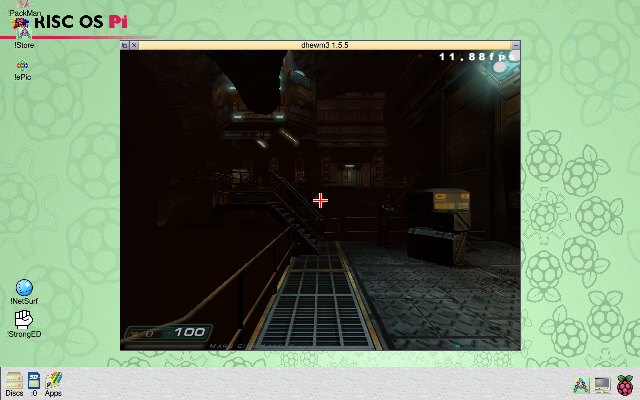
<p>The <a href="https://davidsharp.com/riscos/doom3/">Doom 3 home page</a> lists version 0.2.3 as a 10.6 MB zip. It plays the single-player campaign with sound. This port is for the Pi 4 only, with RISC3D. It runs in an 800×600 window on the desktop, or full screen. From version 0.2.2 it can play the full game as well as the demo.</p>

<p>Sharp reports about 10 to 15 frames a second in Mars City with shadows on, and about half as fast again with them off (the default). A tick in the icon bar menu turns shadows on, including mid-game.</p>

<p>The full game needs a Pi 4 with 2 GB or more, and the original DOOM 3 data from Steam or GOG — not the BFG Edition, whose data the engine cannot read. It has been tested on RISC OS 5.30 on a 4 GB Pi 4, and also needs RISC3D 0.22 or later, SharedUnixLibrary 1.16 or later, and ARMEABISupport 1.03 or later. Source is in the <a href="https://github.com/davidpsharp/riscos-dhewm3">riscos-dhewm3</a> GitHub repository.</p>

<p><a href="/News/assets/images/doom3-pi4-hangar.png"><img src="/News/assets/images/doom3-pi4-hangar.png" alt="The Mars City hangar in Doom 3 in an 800×600 window on a Raspberry Pi 4" width="640" height="400" loading="lazy" /></a></p>

<p><em>The Mars City hangar on a Raspberry Pi 4, drawn by its GPU through RISC3D. Image: <a href="https://davidsharp.com/riscos/doom3/">davidsharp.com</a>.</em></p>

<h2 id="installing">Installing</h2>

<p>The announcement gives PackMan as the easiest route, which will also offer updates:</p>

<ol>
  <li>In PackMan’s Choices, under Sources, add <code class="language-plaintext highlighter-rouge">https://davidsharp.com/riscos/pkg</code></li>
  <li>For the GPU, also add Youll’s source, which has RISC3D: <code class="language-plaintext highlighter-rouge">https://adyoull.github.io/riscos-packages/pkg/index</code></li>
  <li>Update the lists and install ioquake3 or dhewm3 from the Games section</li>
</ol>

<p>Plain zip downloads are on each home page.</p>

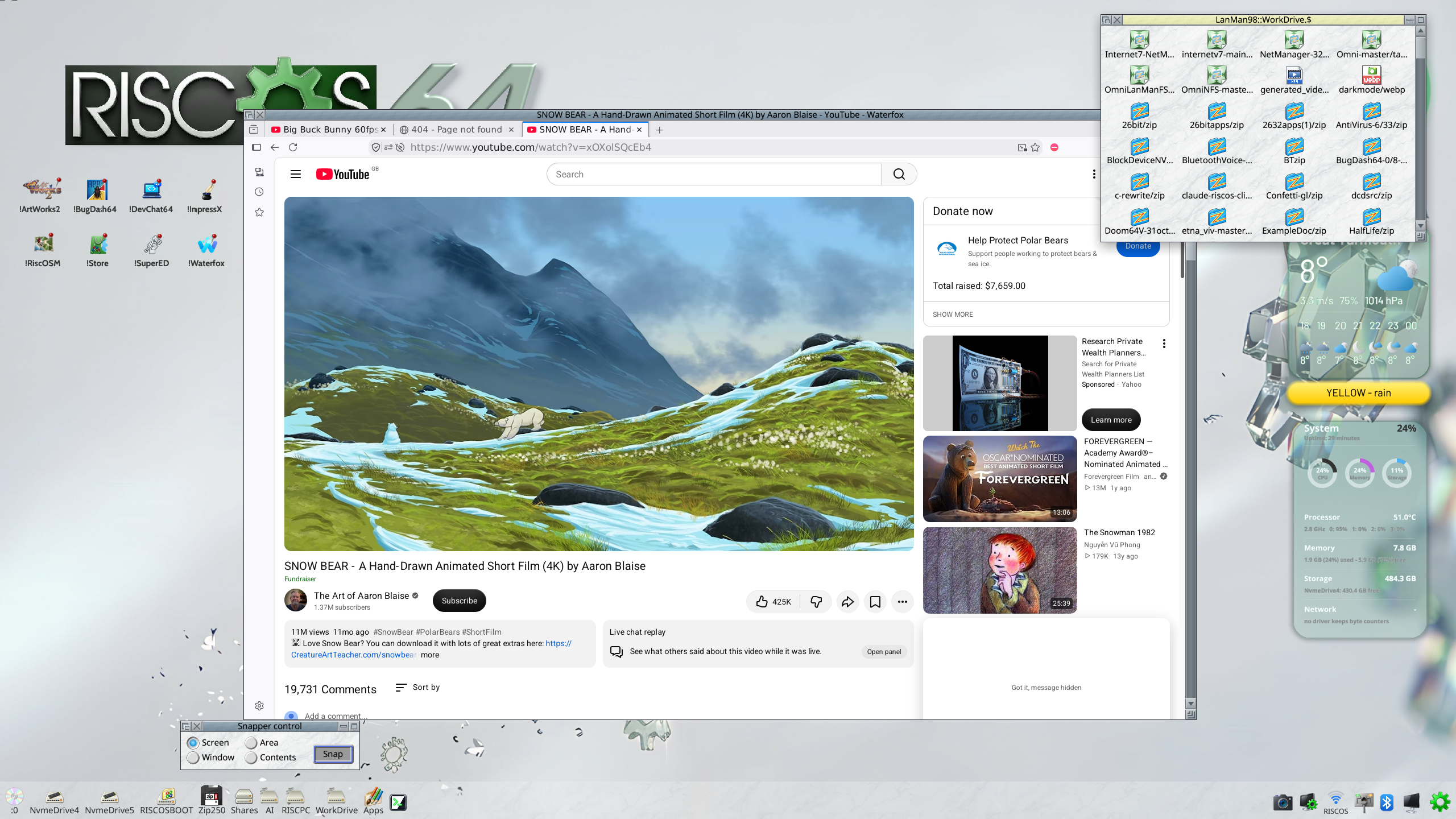
<p>Sharp thanks id Software for releasing the source, the ioquake3 and dhewm3 developers, Andrew Youll for RISC3D and riscos-mesa, and the GCCSDK team for UnixLib and SDL. Bug reports are welcome on the forum thread, on GitHub, or through <a href="https://davidsharp.com/contact/">davidsharp.com/contact</a>.</p>]]></content><author><name></name></author><category term="software" /><category term="games" /><category term="graphics" /><summary type="html"><![CDATA[David Sharp announced on 27 November 2026, in the RISC OS Open Announcements topic Quake 3 and Doom 3 on RISC OS with GPU acceleration via RISC3D, that he has ported two of id Software’s engines to RISC OS: ioquake3 (Quake III Arena, id Tech 3, 1999) and dhewm3 (Doom 3, id Tech 4, 2004). He states that the ports were made with the help of Claude AI.]]></summary><media:thumbnail xmlns:media="http://search.yahoo.com/mrss/" url="https://the-cmp-branch.github.io/News/assets/images/quake3-pi4-rocket-fight.jpg" /><media:content medium="image" url="https://the-cmp-branch.github.io/News/assets/images/quake3-pi4-rocket-fight.jpg" xmlns:media="http://search.yahoo.com/mrss/" /></entry><entry><title type="html">RISC OS 10 Gains Native Waterfox Browser</title><link href="https://the-cmp-branch.github.io/News/2026/11/26/risc-os-10-waterfox-native-browser/" rel="alternate" type="text/html" title="RISC OS 10 Gains Native Waterfox Browser" /><published>2026-11-26T17:00:00+00:00</published><updated>2026-11-26T17:00:00+00:00</updated><id>https://the-cmp-branch.github.io/News/2026/11/26/risc-os-10-waterfox-native-browser</id><content type="html" xml:base="https://the-cmp-branch.github.io/News/2026/11/26/risc-os-10-waterfox-native-browser/"><![CDATA[<p>Martin Eastwood posted on 26 November 2026 in the RISC OS Open 64-bit forum topic <a href="https://www.riscosopen.org/forum/forums/13/topics/20621">RISC OS 64</a> that RISC OS 10 now has Waterfox as a native browser, along with other new applications. He thanked the community testers who have joined the alpha to help develop it.</p>

<p>RISC OS Technologies presents RISC OS 10 on its <a href="https://www.riscostechnologies.co.uk/">home page</a> as a native 64-bit RISC OS for Raspberry Pi 5 and Compute Module 5. This site’s earlier coverage was a <a href="/News/2026/11/17/rougol-november-meeting-risc-os-10/">ROUGOL November meeting report</a> on RISC OS Developments’ first deep dive into the system.</p>

<h2 id="waterfox-and-libreoffice">Waterfox and LibreOffice</h2>

<p>RISC OS Technologies now has a “Waterfox on RISC OS 10” section showing the browser running on the RISC OS 10 desktop. A neighbouring “LibreOffice on RISC OS 10” section shows a development build; LibreOffice is being brought to the system rather than presented as a finished port.</p>

<p><a href="/News/assets/images/riscos10-waterfox.png"><img src="/News/assets/images/riscos10-waterfox.png" alt="Waterfox running as a native browser on the RISC OS 10 desktop" width="2560" height="1440" loading="lazy" /></a></p>

<p><em>Waterfox running on the RISC OS 10 desktop. Image: RISC OS Technologies.</em></p>

<h2 id="still-an-alpha">Still an alpha</h2>

<p>The system remains an alpha, with community testers helping to develop it. Alongside the browser and office work, RISC OS Technologies lists 32-bit applications running in EL0 user space, selected 26-bit applications through JIT translation, preemptive multitasking still in development, four-core support, V3D and Mesa64 graphics, UFS2 storage, the Shield desktop theme, 64-bit ports of PipeDream, Fireworkz and Ovation Pro, and developer tools including GCC 16 and LLVM 22.</p>]]></content><author><name></name></author><category term="software" /><category term="raspberry-pi" /><category term="risc-os-10" /><category term="risc-os-64" /><summary type="html"><![CDATA[Martin Eastwood posted on 26 November 2026 in the RISC OS Open 64-bit forum topic RISC OS 64 that RISC OS 10 now has Waterfox as a native browser, along with other new applications. He thanked the community testers who have joined the alpha to help develop it.]]></summary><media:thumbnail xmlns:media="http://search.yahoo.com/mrss/" url="https://the-cmp-branch.github.io/News/assets/images/riscos10-waterfox.png" /><media:content medium="image" url="https://the-cmp-branch.github.io/News/assets/images/riscos10-waterfox.png" xmlns:media="http://search.yahoo.com/mrss/" /></entry><entry><title type="html">LineEditor 2.79 Released for RISC OS 3.1x to 5.x</title><link href="https://the-cmp-branch.github.io/News/2026/11/25/lineeditor-2-79-command-line-history/" rel="alternate" type="text/html" title="LineEditor 2.79 Released for RISC OS 3.1x to 5.x" /><published>2026-11-25T17:00:00+00:00</published><updated>2026-11-25T17:00:00+00:00</updated><id>https://the-cmp-branch.github.io/News/2026/11/25/lineeditor-2-79-command-line-history</id><content type="html" xml:base="https://the-cmp-branch.github.io/News/2026/11/25/lineeditor-2-79-command-line-history/"><![CDATA[<p>Jon Abbott of the Archimedes Software Preservation Project (<a href="https://www.jaspp.org.uk">JASPP</a>), who posts on StarDot as sirbod, has released LineEditor 2.79. He announced it on <a href="https://stardot.org.uk/forums/viewtopic.php?t=34021">StarDot</a> on 25 November 2026. The download was posted the day before in the JASPP forum topic <a href="https://forums.jaspp.org.uk/forum/viewtopic.php?p=6257">LineEditor 2.79</a>.</p>

<p>LineEditor is a command-line history module originally written by Olly Betts, with further contributors since 2003. Abbott’s 2.79 build is 26/32-bit neutral and runs on RISC OS 3.1x to RISC OS 5.x. On the JASPP forum he notes that it supplies history at command prompts such as Supervisor and BASIC.</p>

<p>Abbott says he has been quietly maintaining the module since 2015 and is not sure he ever released it. He has fixed obvious bugs, made it backward compatible with RISC OS 3.1x, and made it ROM-safe, though he does not recall testing it in a ROM.</p>

<p>The JASPP release notes for 2.79 list three changes: commented-out code has been removed and the help tidied, the module flags have been moved to after the code, and the special character in the dictionary is now <code class="language-plaintext highlighter-rouge">^</code>.</p>

<h2 id="installing">Installing</h2>

<p>LineEditor can be installed through PackMan using the <a href="https://www.jaspp.org.uk/packages/release">JASPP source</a>. The index lists package LineEditor 2.79-1. It can also be downloaded from the <a href="https://forums.jaspp.org.uk/forum/viewtopic.php?p=6257">JASPP forum post</a>, which attaches <code class="language-plaintext highlighter-rouge">LineEditor279.zip</code> (the module and <code class="language-plaintext highlighter-rouge">!Help</code>) and <code class="language-plaintext highlighter-rouge">LineEditor279_src.zip</code> (the BASICTxt source). To load it at boot, that post says to copy the module to <code class="language-plaintext highlighter-rouge">!Boot.Choices.Boot.Tasks</code>.</p>]]></content><author><name></name></author><category term="software" /><summary type="html"><![CDATA[Jon Abbott of the Archimedes Software Preservation Project (JASPP), who posts on StarDot as sirbod, has released LineEditor 2.79. He announced it on StarDot on 25 November 2026. The download was posted the day before in the JASPP forum topic LineEditor 2.79.]]></summary></entry><entry><title type="html">Andrew Youll round-up: RISC3D 0.18, Folio test77, Lumen 0.0.42, Groove 0.4.4 and GTK updates</title><link href="https://the-cmp-branch.github.io/News/2026/11/25/andrew-youll-round-up-risc3d-folio-lumen-groove/" rel="alternate" type="text/html" title="Andrew Youll round-up: RISC3D 0.18, Folio test77, Lumen 0.0.42, Groove 0.4.4 and GTK updates" /><published>2026-11-25T08:05:00+00:00</published><updated>2026-11-25T08:05:00+00:00</updated><id>https://the-cmp-branch.github.io/News/2026/11/25/andrew-youll-round-up-risc3d-folio-lumen-groove</id><content type="html" xml:base="https://the-cmp-branch.github.io/News/2026/11/25/andrew-youll-round-up-risc3d-folio-lumen-groove/"><![CDATA[<p>This is a combined round-up of Andrew Youll’s updates from 22–25 November 2026, grouped by project. The announcements were posted in the RISC OS Open Announcements forum, with matching GitHub releases. It follows this site’s <a href="/News/2026/11/22/andrew-youll-round-up-risc3d-gtk-lumen-groove/">earlier round-up of 17–21 November</a>.</p>

<h2 id="risc3d--v3drender">RISC3D / V3DRender</h2>

<p>Youll posted these in <a href="https://www.riscosopen.org/forum/forums/1/topics/20678">RISC3D: 3D acceleration for RISC OS on Linux and RISC OS on the Pi 4</a>.</p>

<p><a href="https://github.com/adyoull/riscos-risc3d/releases/tag/v0.16">RISC3D 0.16</a> (22 November) adds a RISC3D page in Configure (<code class="language-plaintext highlighter-rouge">!RISC3DSetup</code> in <code class="language-plaintext highlighter-rouge">!Boot.Resources.Configure</code>). The page can turn GPU drawing off so that programs draw in software, with no 3D driver loaded. The choice is kept in <code class="language-plaintext highlighter-rouge">Choices:RISC3D.Settings</code>. The RISC3D module 0.08 loads no driver while <code class="language-plaintext highlighter-rouge">RISC3D$Off</code> is set.</p>

<p><a href="https://github.com/adyoull/riscos-risc3d/releases/tag/v0.17">RISC3D 0.17</a> (22 November) expands that page: it shows which driver is in use, the renderer, OpenGL and OpenGL ES versions, the largest texture and the extensions. On native RISC OS the OpenGL figures need <a href="https://github.com/adyoull/riscos-mesa"><code class="language-plaintext highlighter-rouge">!MesaLibs</code> 20.3.5-23</a>. A Hardware section from V3DRender reports the GPU, its clock, GPU memory in use, and whether desktop 2D is on. Programs can share textures and buffers between OpenGL contexts, and use a context per thread.</p>

<p><a href="https://github.com/adyoull/riscos-v3drender/releases/tag/v0.26">V3DRender 0.26</a> (22 November, bundled with RISC3D 0.17) powers the GPU up before touching it, which Youll described as a likely fix for start-up aborts on some boards, including a CM4. Desktop rectangle copies and fills can run on the GPU (<code class="language-plaintext highlighter-rouge">*V3DRender 2D on</code>); this is off by default. Youll’s timings on a Pi 4 at 1920×1200, 32 bits a pixel, include a 512×320 copy in 266 µs on the GPU against 566 µs on the CPU.</p>

<p><a href="https://github.com/adyoull/riscos-risc3d/releases/tag/v0.18">RISC3D 0.18</a> (23 November) fixes Configure’s RISC3D page. Opening it stopped with “SWI &amp;59D01 not known” where ARMEABISupport was not already loaded (reported by Doug Webb and Chris Hughes on CM4 machines). <code class="language-plaintext highlighter-rouge">!RISC3DSetup</code> now loads SharedUnixLibrary and ARMEABISupport from <code class="language-plaintext highlighter-rouge">System:Modules</code>, or says which to install from PackMan. Nothing else changed from 0.17. In PackMan the matching package is RISC3D 0.09.0.2-1.</p>

<h2 id="risc-os-on-linux">RISC OS on Linux</h2>

<p>These updates were posted in <a href="https://www.riscosopen.org/forum/forums/1/topics/20657">Updated RISC OS on Linux</a>.</p>

<p>On 24 November Youll told George T. Greenfield that audio on the Pi 4 should be working. The problem was how <code class="language-plaintext highlighter-rouge">rol-snd</code> (the Linux-to-RISC OS sound interface) read some monitors’ ELD data; Youll reproduced it on a monitor of his own.</p>

<p>A kernel update had been clearing modules from the FAT partition to make space for the new kernel, and not copying them back when space ran out. Youll pushed a fix that copies the modules out, updates the kernel, then copies them back. Norman Lawrence, whose Argon One battery icon had disappeared, needed to run Updates twice, with a restart after each, and then the icon returned to the icon bar.</p>

<h2 id="gtk-apps">GTK apps</h2>

<p>Posted in the <a href="https://www.riscosopen.org/forum/forums/1/topics/20588">GTK 3.24.41</a> topic on 22 November, after this site’s earlier note of <a href="/News/2026/11/22/andrew-youll-round-up-risc3d-gtk-lumen-groove/">AbiWord 3.0.8-riscos9 and Gnumeric 1.12.62-riscos23</a>.</p>

<p><a href="https://github.com/adyoull/riscos-gtk/releases/tag/gtklibs-3.24.52-27"><code class="language-plaintext highlighter-rouge">!GTKLibs</code> 3.24.52-27</a> and <a href="https://github.com/adyoull/riscos-gtk/releases/tag/gnumeric-1.12.62-riscos24">Gnumeric 1.12.62-riscos24</a> follow more of Doug Webb’s testing. Gnumeric’s <code class="language-plaintext highlighter-rouge">.xls</code> files no longer give Fireworkz black cells: unfilled cells had been written with a black pattern colour that Excel ignores but Fireworkz used as the background.</p>

<p>The File type menu in a Save box opened from Menu &gt; File &gt; Save As no longer closes that box (which could leave the program waiting, and crash Gnumeric if Save As was chosen again). After the first GTK program of a session, later ones start faster because the desktop’s fonts are checked only once. Gnumeric riscos24 needs !GTKLibs 3.24.52-25 or later.</p>

<h2 id="folio">Folio</h2>

<p>Posted in <a href="https://www.riscosopen.org/forum/forums/1/topics/20590">Folio: a PDF and ebook reader for the desktop</a>, after this site’s note of <a href="/News/2026/11/13/folio-test76-user-guide-riscpc/">test76</a>.</p>

<p><a href="https://github.com/adyoull/riscos-folio/releases/tag/v0.0.1-test77">0.0.1-test77</a> (23 November) takes most of Matthew Phillips’ suggestions. Measure moves from Edit onto the document menu under Find, with a ruler button on the toolbar. Add to page writes the figures on the page in red. You can type a scale ratio, or draw a line over a scale bar and type its real length. Pages &gt; Arrange pages fills the window with thumbnails so pages can be selected, moved and deleted. There is a matching RiscPC zip.</p>

<h2 id="lumen">Lumen</h2>

<p>Posted in <a href="https://www.riscosopen.org/forum/forums/1/topics/20646">Lumen: a photo library and non-destructive editor for RISC OS</a>, after this site’s note of <a href="/News/2026/11/22/andrew-youll-round-up-risc3d-gtk-lumen-groove/">0.0.40</a>.</p>

<p><a href="https://github.com/adyoull/riscos-lumen/releases/tag/v0.0.41">0.0.41</a> (23 November) adds Rotate and flip on the Selection menu and the Viewer’s Photo menu. Left and Right turn photos a quarter (<code class="language-plaintext highlighter-rouge">[</code> and <code class="language-plaintext highlighter-rouge">]</code> in the Browser too); Flip horizontally and Flip vertically mirror them. The file is not changed. FITS files typed FITS are imported without a <code class="language-plaintext highlighter-rouge">/fits</code> name. When a FITS header has a sky position, Lumen uses it to show the picture as the sky looks, so DWARF stacks that had come out upside down now have north up. Very smooth stacks, such as Chris Terran’s star-removed M45, are stretched so the nebulosity shows.</p>

<p><a href="https://github.com/adyoull/riscos-lumen/releases/tag/v0.0.42">0.0.42</a> (24 November) puts a Stretch group on FITS pictures: Amount (100% is the auto-stretch as before) and Black point. The stretch is applied as the file is read and kept with the photo. H flips horizontally and U vertically. The Rotate and flip menus now show their keys.</p>

<h2 id="groove">Groove</h2>

<p>Posted in <a href="https://www.riscosopen.org/forum/forums/1/topics/20638">Groove: a music studio for RISC OS</a>, after this site’s note of <a href="/News/2026/11/22/andrew-youll-round-up-risc3d-gtk-lumen-groove/">0.4.2</a>.</p>

<p><a href="https://github.com/adyoull/riscos-groove/releases/tag/v0.4.3">0.4.3</a> (23 November) writes MuseScore and MusicXML scores the way the score itself does: each note in its own voice and on its own staff, with the score’s written values, spelling, clefs, ties, rests, beams, tuplets, lyrics, tempo words, dynamics, slurs and pedalling. Repeats, endings, D.C. and D.S. play in the same order as in MuseScore. Youll checked it bar by bar against MuseScore 4 on OpenScore’s 1,352 Lieder and 121 string quartets: 99% of the songs’ bars and 99.6% of the quartets’ bars come out as MuseScore writes them, up from about 22%. It also starts on a Raspberry Pi with alignment exceptions turned on (Geofrey Baxendale’s report). Groove is in PackMan as 0.4.3.0.1-1 under Audio.</p>

<p><a href="https://github.com/adyoull/riscos-groove/releases/tag/v0.4.4">0.4.4</a> (24 November) lets the Score window zoom to 25%, 30%, 40%, 50%, 60%, 80%, 100%, 130% and 160% (it previously stopped at 60%), after Paul Sprangers asked to read orchestral scores. Ctrl with the scroll wheel, and + and −, zoom as well. At 25%, about 25 bars of a string quartet fit across the window. PackMan has it as 0.4.4.0.1-1.</p>

<h2 id="riscos-crossdev--unixlib">riscos-crossdev / UnixLib</h2>

<p>These were GitHub releases on 22 November; there was no new Youll post in the <a href="https://www.riscosopen.org/forum/forums/1/topics/20589">riscos-crossdev</a> forum topic in this window.</p>

<p><a href="https://github.com/adyoull/riscos-unixlib/releases/tag/v5.0.3.9">riscos-unixlib 5.0.3.9</a>: <code class="language-plaintext highlighter-rouge">lseek</code> past the end of a file no longer extends it, which had made SQLite say “file is not a database” for new databases on FileCore discs.</p>

<p><a href="https://github.com/adyoull/riscos-unixlib/releases/tag/v5.0.3.10">riscos-unixlib 5.0.3.10</a>: a bad file descriptor below 1000 returns EBADF without a SWI. TORCS had been trying a bad fd about 13,500 times a second under RISC OS on Linux, and track loading stalled.</p>

<p><a href="https://github.com/adyoull/riscos-crossdev/releases/tag/v1.11.3">riscos-crossdev 1.11.3</a> takes in mixed-program findings: several library directories separated with <code class="language-plaintext highlighter-rouge">;</code> in <code class="language-plaintext highlighter-rouge">LD_LIBRARY_PATH</code>, a <code class="language-plaintext highlighter-rouge">WimpSlot</code> in <code class="language-plaintext highlighter-rouge">!Run</code>, and shared libraries as ARM code.</p>

<p><a href="https://github.com/adyoull/riscos-crossdev/releases/tag/v1.12">riscos-crossdev 1.12</a> ships UnixLib 5.0.3.9 and links the whole of UnixLib into mixed programs, so a newer library pack can use UnixLib functions without the program being relinked.</p>

<p><a href="https://github.com/adyoull/riscos-crossdev/releases/tag/v1.13">riscos-crossdev 1.13</a> ships UnixLib 5.0.3.10 and aligns UnixLib’s assembler data. Programs built with 1.12 and earlier could abort at start-up on a Pi with alignment exceptions on (Groove and YTDL were affected). Rebuild with 1.13. An optional GCC 16 toolchain is attached for ports that need C++23.</p>

<p>Andrew is speaking at WROCC on 2 December 2026, “Andrew Youll – Building Blocks” (<a href="https://www.wrocc.org.uk/meetings">WROCC meetings</a>).</p>]]></content><author><name></name></author><category term="andrew-youll" /><category term="round-up" /><category term="software" /><category term="development" /><summary type="html"><![CDATA[This is a combined round-up of Andrew Youll’s updates from 22–25 November 2026, grouped by project. The announcements were posted in the RISC OS Open Announcements forum, with matching GitHub releases. It follows this site’s earlier round-up of 17–21 November.]]></summary></entry><entry><title type="html">Forty Years On: The BBC Domesday Project, Published 25 November 1986</title><link href="https://the-cmp-branch.github.io/News/2026/11/25/bbc-domesday-project-40-years/" rel="alternate" type="text/html" title="Forty Years On: The BBC Domesday Project, Published 25 November 1986" /><published>2026-11-25T08:00:00+00:00</published><updated>2026-11-25T08:00:00+00:00</updated><id>https://the-cmp-branch.github.io/News/2026/11/25/bbc-domesday-project-40-years</id><content type="html" xml:base="https://the-cmp-branch.github.io/News/2026/11/25/bbc-domesday-project-40-years/"><![CDATA[<p>Today, 25 November 2026, is 40 years since the BBC Domesday Project was published. <a href="http://www.beebmaster.co.uk/Domesday/DDiscs.html">BeebMaster</a> records that the National and Community discs were published by the BBC on 25 November 1986, as the first Advanced Interactive Video laserdiscs for the BBC Master AIV system.</p>

<p>The <em>Radio Times</em> for 22–28 November 1986 described the discs as “out this week” and said they would make their public debut on <em>Tomorrow’s World</em> on Thursday at 8pm on BBC1 — 27 November 1986.</p>

<h2 id="a-survey-for-the-900th-anniversary-of-the-domesday-book">A survey for the 900th anniversary of the Domesday Book</h2>

<p>The project was a partnership between Acorn Computers, Philips, Logica and the BBC, with some funding from the European Commission’s ESPRIT programme, to mark the 900th anniversary of the original Domesday Book of 1086. Wikipedia, drawing on contemporary reporting, says it was compiled between 1984 and 1986 and that over a million people took part, including children from more than 9,000 schools. The Centre for Computing History gives the same “over 1 million people” figure and a higher school count of 14,000; this article uses Wikipedia’s more conservative school figure.</p>

<p>Contributors, mostly schoolchildren, wrote about geography, history or social issues in their local area, or about daily life. That material was linked with maps, colour photographs, statistical data, video and “virtual walks”, together with professionally prepared footage, tours of landmarks, and datasets such as the 1981 census.</p>

<p>The results were stored on two 12-inch LaserVision Read Only Memory (LV-ROM) discs, which held analogue video and still pictures as well as digital data:</p>

<ul>
  <li>The <strong>Community Disc</strong> is map-based and shows Britain as seen by the people who lived there. The country was divided into 4 km × 3 km blocks based on Ordnance Survey grid references. It is double-sided, with a Southern and a Northern side.</li>
  <li>The <strong>National Disc</strong> is topic-based, with census data, professional photographs and walkarounds. Side 2 held video material.</li>
</ul>

<p><a href="https://chrisacorns.computinghistory.org.uk/Computers/Domesday.html">Chris’s Acorns</a> notes that each disc contains 108,000 pictures and 648 megabytes of data.</p>

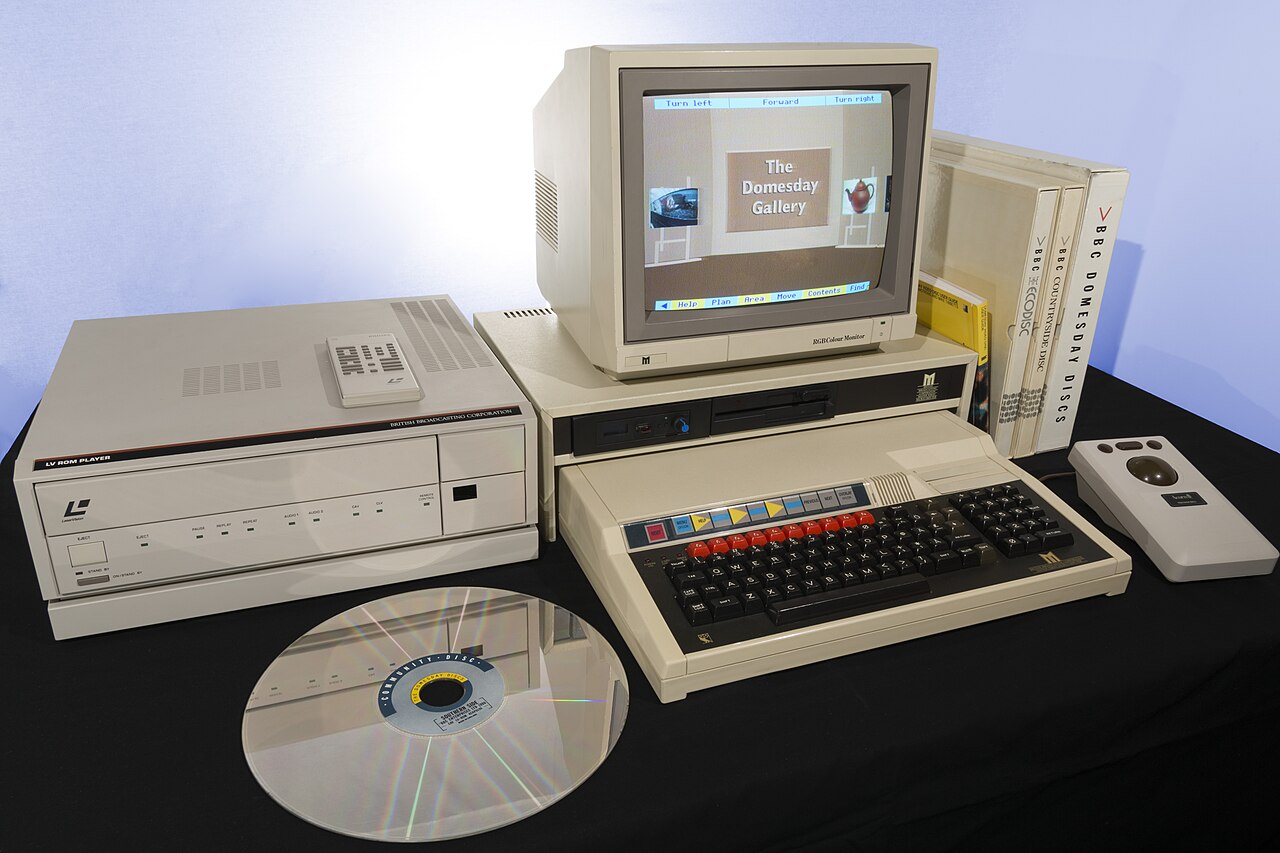
<p><a href="/News/assets/images/bbc-domesday-system.jpg"><img src="/News/assets/images/bbc-domesday-system.jpg" alt="A BBC Domesday system: Acorn BBC Master AIV, Philips VP415 LaserDisc player and Marconi RB2 trackerball" width="1280" height="853" loading="lazy" /></a></p>

<p><em>A BBC Domesday system: Acorn BBC Master AIV, Philips VP415 LaserDisc player and Marconi RB2 trackerball. Photo: <a href="https://commons.wikimedia.org/wiki/File:BBC_Master_AIV_(Domesday_System)_(1).jpg">simon.inns</a> / Wikimedia Commons, <a href="https://creativecommons.org/licenses/by/2.0/">CC BY 2.0</a>.</em></p>

<h2 id="the-acorn-hardware">The Acorn hardware</h2>

<p>Viewing the discs needed a BBC Master AIV: an Acorn BBC Master expanded with a SCSI controller and the 65C102 “Turbo” co-processor, controlling a Philips VP415 LaserVision player. Chris’s Acorns describes the SCSI bus as the data link to the player, which appeared to the Master as a large, slow read-only SCSI disc. The Video Filing System (VFS) ROM was a read-only version of ADFS with extra commands for the VP415. The pointer was an Acorn trackerball — a rebadged Marconi RB2 — on the Master’s User Port.</p>

<p>The application software was written in BCPL, mainly by Logica.</p>

<h2 id="cost-and-why-few-were-bought">Cost, and why few were bought</h2>

<p>Chris’s Acorns and the Centre for Computing History both give the launch price of the complete BBC AIV system as £5,156.75 including VAT. Acorn’s September 1987 retail price list lists AVC11, the BBC AIV System, at that figure: the Domesday disc set, BBC Master AIV with trackerball, BBC AIV LaserVision player, and a colour monitor.</p>

<p>Andy Finney, who worked on the project, later wrote that the package was around £5,000 — “the cost of a small family car” — and “a little expensive for many schools”. Wikipedia, citing <em>Acorn User</em> in May 1988, says that by early 1988 fewer than 2,000 Domesday systems had been sold, with a voucher scheme reducing the price to £3,000.</p>

<h2 id="digital-obsolescence-and-later-rescue">Digital obsolescence, and later rescue</h2>

<p>By 2002 the project was widely cited as an example of digital obsolescence: the original Domesday Book could still be read after nine centuries, while the 1986 discs already needed rare hardware. The still images had been stored as single-frame analogue video, overlaid by the computer’s graphics, years before JPEG and truecolour video cards were common.</p>

<p>In 2002 the CAMiLEON project (Creative Archiving at Michigan and Leeds: Emulating the Old on the New), a partnership between the University of Leeds and the University of Michigan, developed emulation that could access the discs. BBC News reported that work on 2 December 2002. CAMiLEON transferred the digital files over SCSI and digitised the still-frame video, then used a modified BeebEm emulator with Turbo, SCSI and laserdisc support.</p>

<p>In May 2011 BBC Learning republished much of the Community Disc on the Domesday Reloaded website. That site went offline in June 2018; a snapshot is held by The National Archives.</p>

<p>The <a href="https://www.domesday86.com/">Domesday86</a> project has since worked on preserving both the laserdiscs and the hardware needed to use them, with the aim of running the system without the original rare player. The Centre for Computing History in Cambridge keeps a working Domesday system on public display, as does The National Museum of Computing at Bletchley Park.</p>

<h2 id="on-show-in-the-risc-os-community">On show in the RISC OS community</h2>

<p>RISC OS Open’s news post <a href="https://www.riscosopen.org/news/articles/2026/10/15/laser-focused-on-london">Laser focused on London</a> (15 October 2026) noted that it had also been forty years since the launch of the Domesday laserdisc system, and that a still-working system would be available at the London Show on 24 October 2026. Bryan Hogan wrote on the show’s forum topic that visitors could look up their hometown as it was around 1986.</p>

<h2 id="sources">Sources</h2>

<ul>
  <li><a href="http://www.beebmaster.co.uk/Domesday/DDiscs.html">BeebMaster, The Domesday Discs</a></li>
  <li><a href="https://en.wikipedia.org/wiki/BBC_Domesday_Project">Wikipedia, BBC Domesday Project</a></li>
  <li><a href="https://chrisacorns.computinghistory.org.uk/Computers/Domesday.html">Chris’s Acorns, BBC Master AIV &amp; Domesday Project</a></li>
  <li><a href="https://www.computinghistory.org.uk/det/55515/Domesday%20System%20-%20BBC%20Domesday%20Discs/">Centre for Computing History, Domesday System – BBC Domesday Discs</a></li>
  <li><a href="https://www.atsf.co.uk/dottext/domesday.html">Andy Finney, The BBC Domesday Project</a></li>
  <li><a href="https://www.domesday86.com/wp-content/uploads/2018/02/Radio-Times-Domesday-Nov-1986.pdf"><em>Radio Times</em>, 22–28 November 1986</a> (scan hosted by Domesday86)</li>
  <li><a href="http://news.bbc.co.uk/2/hi/technology/2534391.stm">BBC News, Digital Domesday book unlocked, 2 December 2002</a></li>
  <li><a href="https://www.riscosopen.org/news/articles/2026/10/15/laser-focused-on-london">RISC OS Open, Laser focused on London, 15 October 2026</a></li>
  <li><a href="https://www.domesday86.com/">Domesday86</a></li>
</ul>]]></content><author><name></name></author><category term="history" /><category term="hardware" /><summary type="html"><![CDATA[Today, 25 November 2026, is 40 years since the BBC Domesday Project was published. BeebMaster records that the National and Community discs were published by the BBC on 25 November 1986, as the first Advanced Interactive Video laserdiscs for the BBC Master AIV system.]]></summary><media:thumbnail xmlns:media="http://search.yahoo.com/mrss/" url="https://the-cmp-branch.github.io/News/assets/images/bbc-domesday-system.jpg" /><media:content medium="image" url="https://the-cmp-branch.github.io/News/assets/images/bbc-domesday-system.jpg" xmlns:media="http://search.yahoo.com/mrss/" /></entry><entry><title type="html">RISC OS Open Publishes a Continuous Integration Guide for Contributors</title><link href="https://the-cmp-branch.github.io/News/2026/11/24/rool-continuous-integration-guide/" rel="alternate" type="text/html" title="RISC OS Open Publishes a Continuous Integration Guide for Contributors" /><published>2026-11-24T17:00:00+00:00</published><updated>2026-11-24T17:00:00+00:00</updated><id>https://the-cmp-branch.github.io/News/2026/11/24/rool-continuous-integration-guide</id><content type="html" xml:base="https://the-cmp-branch.github.io/News/2026/11/24/rool-continuous-integration-guide/"><![CDATA[<p>RISC OS Open has added a <a href="https://www.riscosopen.org/content/documents/risc-os-coding-guidelines/ci">Continuous Integration</a> page to its RISC OS Coding Guidelines. Steve Revill announced it on 24 November 2026 in the Code review forum topic <a href="https://www.riscosopen.org/forum/forums/3/topics/20682">ROOL coding guidelines</a>: “We now have a CI page – but note that this is a working draft and subject to change!” Earlier in that topic he had said ROOL would look at putting a little more in around merge requests and CI. This site covered the <a href="/News/2026/11/21/rool-coding-guidelines/">coding guidelines</a> when they were published on 21 November 2026.</p>

<h2 id="how-the-ci-works">How the CI works</h2>

<p>ROOL’s GitLab CI checks each change to a component before a person reviews it. It runs on a contributor’s fork whenever they push, and again on the merge request. In both places the results appear under Build, then Pipelines. Many components already use it.</p>

<p>Enabling it on a typical component already in the tree needs one small <code class="language-plaintext highlighter-rouge">.gitlab-ci.yml</code> file at the component’s root. That file includes the component’s jobs from the Support/CI project, from a file named after the last part of the component’s GitLab path. For FileSwitch, whose path is <code class="language-plaintext highlighter-rouge">RiscOS/Sources/FileSys/FileSwitch</code>, the example includes <code class="language-plaintext highlighter-rouge">/FileSwitch.yml</code> from Support/CI.</p>

<p>The page then lists four steps:</p>

<ol>
  <li>Add a <code class="language-plaintext highlighter-rouge">.gitlab-ci.yml</code> file of that form at the component’s root.</li>
  <li>Commit the file and push the branch to the fork. A pipeline starts immediately.</li>
  <li>Correct whatever the pipeline reports, in the same commit or an earlier one. In a component that has not used CI before, the jobs usually report a missing <code class="language-plaintext highlighter-rouge">.gitattributes</code> file, <code class="language-plaintext highlighter-rouge">.gitignore</code> file or licence file.</li>
  <li>Submit the merge request once the pipeline passes.</li>
</ol>

<p>The jobs are generated centrally from the build system’s ModuleDB and components files, and held in Support/CI. Each component’s <code class="language-plaintext highlighter-rouge">.gitlab-ci.yml</code> refers to them indirectly, so RISC OS Open can change the jobs across the whole tree without a commit to every component. Most jobs check only the changes a branch makes, not the component’s files as a whole, so a component with existing problems can enable CI without first correcting them. The included jobs should be left as they are. A change to them can be proposed on the Support/CI_Source project. RISC OS Open configures any exemption that applies to a whole component, such as disabling a job.</p>

<h2 id="why-the-jobs-exist">Why the jobs exist</h2>

<p>The jobs a component receives depend on its ModuleDB entry and change over time, so the guide explains what they are for rather than listing every check:</p>

<ul>
  <li><strong>Real names.</strong> Commits must carry the author’s and committer’s real names so that each change can be audited. A merge request page shows GitLab usernames instead, so the CI reads the names from the commits before the merge.</li>
  <li><strong>Version numbers.</strong> A component normally keeps its version in a standard <code class="language-plaintext highlighter-rouge">VersionNum</code> file, which RISC OS Open’s tools increment when a merge request is accepted. If that file is missing or non-standard, each commit message must say how the change is to be tagged.</li>
  <li><strong>Copyright notices and licence files.</strong> Every source file must show the terms it can be distributed under. The CI looks for a copyright notice, and a licence file at the component’s root, such as <code class="language-plaintext highlighter-rouge">LICENSE</code> or <code class="language-plaintext highlighter-rouge">COPYING</code>, covers the component as a whole.</li>
  <li><strong>Language attributes.</strong> RISC OS source files have no extensions, so GitLab cannot guess the language from a name. A <code class="language-plaintext highlighter-rouge">.gitattributes</code> file records the language of each source directory and typed file so that highlighting works.</li>
  <li><strong>Ignored files.</strong> A <code class="language-plaintext highlighter-rouge">.gitignore</code> file lists the object files, binaries and dependency files a build leaves behind, so they cannot be committed by mistake.</li>
  <li><strong>Makefiles.</strong> Recipe lines must start with a tab: GNU make on Linux does not accept the spaces that the DDE’s amu allows, so the cross-build would fail. Makefiles must also omit the dynamic dependencies amu appends, which record paths on the machine that built the component and mean nothing elsewhere.</li>
  <li><strong>Whitespace and cppcheck.</strong> The CI flags whitespace errors of the kind <code class="language-plaintext highlighter-rouge">git diff --check</code> finds, and any new diagnostics from cppcheck, a static analyser for C.</li>
  <li><strong>Imported source.</strong> Code brought in from another project is left as its authors wrote it, whitespace errors included, so later versions from that project can still be merged easily.</li>
  <li><strong>Building.</strong> The component is built against an overnight copy of the whole tree, and the result is attached to the pipeline so reviewers and testers can try the change from the merge request page.</li>
</ul>

<p>The page also covers what to do when a job fails, including how to correct a commit message or a name and how to exempt a file from the whitespace or cppcheck job where there is good reason. A component can add jobs of its own after the <code class="language-plaintext highlighter-rouge">include</code> — regression tests in particular are welcome — though until RISC OS Open has GitLab runners on RISC OS machines those jobs are limited to what can be built and run on Linux. A further section explains how to try most of the same jobs on a new component that is not yet in the build, by generating them from Support/CI_Source for the time being.</p>

<h2 id="early-feedback">Early feedback</h2>

<p>In the same forum topic on 24 November, Marc Warne said he enabled CI on the Serial component on a scratch branch and the pipeline ran first time, with eight of ten jobs green. The softload job caught a case-sensitivity problem (<code class="language-plaintext highlighter-rouge">Hdr:OSBytes</code> versus the exported <code class="language-plaintext highlighter-rouge">OsBytes</code>) that one of his open merge requests already fixes.</p>

<p>The CI page is a working draft and is subject to change. It is on <a href="https://www.riscosopen.org/content/documents/risc-os-coding-guidelines/ci">RISC OS Open</a>. Discussion is in the <a href="https://www.riscosopen.org/forum/forums/3/topics/20682">forum topic</a>.</p>]]></content><author><name></name></author><category term="rool" /><category term="development" /><category term="guidelines" /><summary type="html"><![CDATA[RISC OS Open has added a Continuous Integration page to its RISC OS Coding Guidelines. Steve Revill announced it on 24 November 2026 in the Code review forum topic ROOL coding guidelines: “We now have a CI page – but note that this is a working draft and subject to change!” Earlier in that topic he had said ROOL would look at putting a little more in around merge requests and CI. This site covered the coding guidelines when they were published on 21 November 2026.]]></summary></entry><entry><title type="html">Former Acorn Co-Founder Hermann Hauser Backs planqc Cambridge Quantum Lab</title><link href="https://the-cmp-branch.github.io/News/2026/11/24/hermann-hauser-planqc-cambridge-quantum-lab/" rel="alternate" type="text/html" title="Former Acorn Co-Founder Hermann Hauser Backs planqc Cambridge Quantum Lab" /><published>2026-11-24T08:05:00+00:00</published><updated>2026-11-24T08:05:00+00:00</updated><id>https://the-cmp-branch.github.io/News/2026/11/24/hermann-hauser-planqc-cambridge-quantum-lab</id><content type="html" xml:base="https://the-cmp-branch.github.io/News/2026/11/24/hermann-hauser-planqc-cambridge-quantum-lab/"><![CDATA[<p>German quantum computing company planqc announced on 23 November 2026 that it is expanding into the United Kingdom with a new laboratory in Cambridge, backed by Acorn Computers co-founder Hermann Hauser. The company published the news as <a href="https://planqc.eu/news/planqc-expands-into-the-uk-with-new-cambridge-site">planqc expands into the UK with new Cambridge site</a>. <a href="https://www.telegraph.co.uk/business/2026/11/23/founder-of-britains-biggest-tech-firm-sets-up-quantum-lab-i/">The Telegraph</a> and <a href="https://www.newelectronics.co.uk/content/news/planqc-establishes-cambridge-base-as-part-of-uk-expansion">New Electronics</a> also reported the announcement.</p>

<p>planqc is based in Garching, near Munich, and grew out of the Max Planck Institute of Quantum Optics and LMU Munich. It builds quantum computers that use individual neutral atoms as qubits. It is setting up planqc UK Ltd, with a Cambridge site to assemble, integrate and commission systems, and is investing “double-digit millions” of euros. The company has not given an exact figure, an opening date or a qubit target.</p>

<p>Co-founders Dr Sebastian Blatt and Dr Alexander Glätzle will lead the UK company. planqc will work on optical-lattice technology with Professor Ulrich Schneider’s group at the University of Cambridge’s Cavendish Laboratory.</p>

<p>The firm has more than 130 staff and has raised €55 million in seed and Series A funding. Together with publicly funded projects — the €29 million DiNAQC contract and the €19.1 million MAQCS consortium — the announced financing and project volumes exceed €100 million. Cambridge is its second site outside Germany, after Innsbruck.</p>

<p>Hauser has been an investor and advisory board member since 2023. On the planqc announcement he said: “With Arm, we demonstrated in Cambridge that superior architecture ultimately wins out. I believe quantum computing will be no different, and neutral atoms in optical lattices are among the approaches I see as having the greatest potential. The fact that planqc is now advancing this architecture at the Cavendish Laboratory, where I completed my own PhD, brings things full circle for me.” He also said: “Europe has an opportunity not just to use the next major computing platform, but to help shape it.”</p>

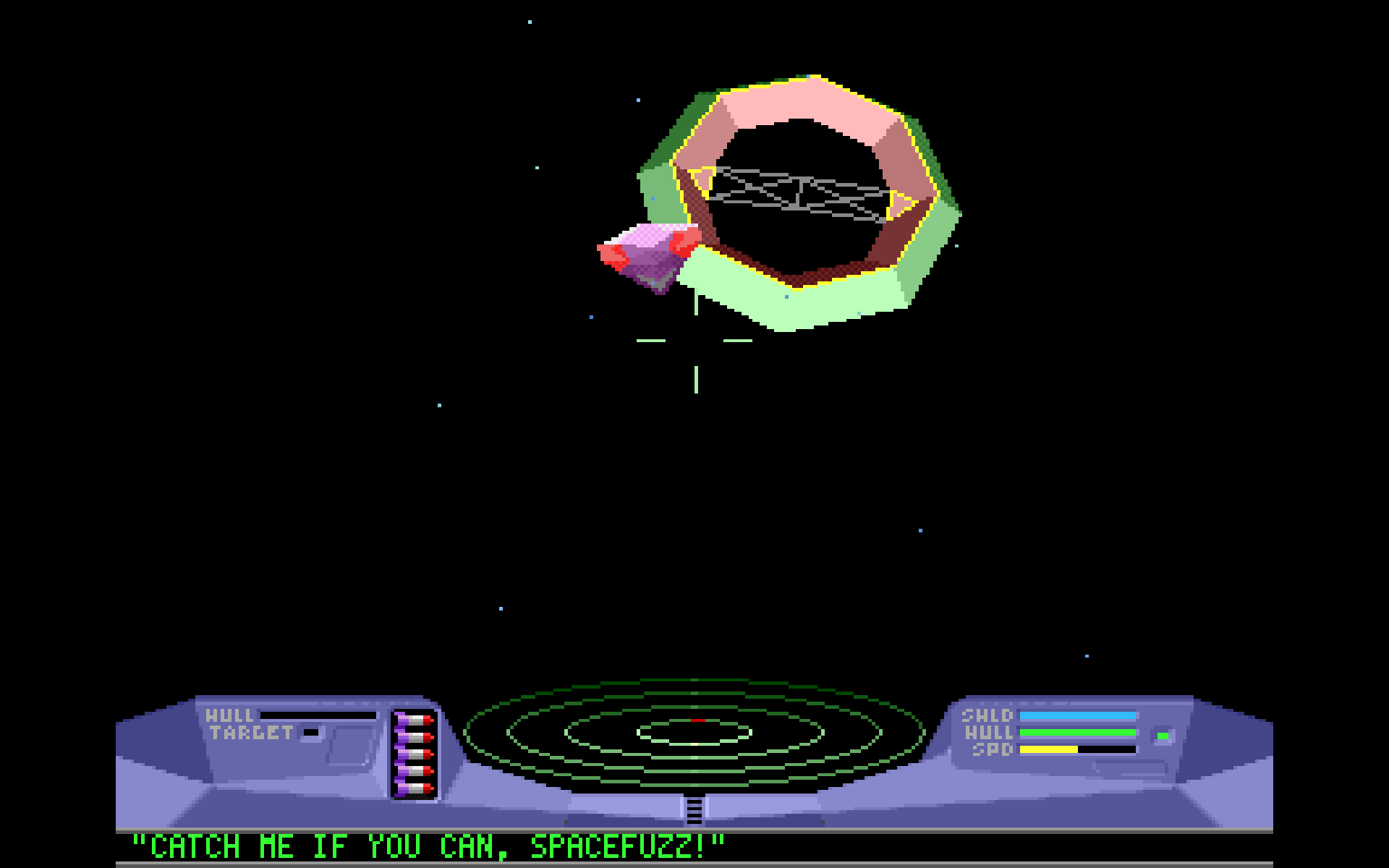
<p>Hauser co-founded Acorn Computers with Chris Curry in 1978 and, according to <a href="https://www.telegraph.co.uk/business/2026/11/23/founder-of-britains-biggest-tech-firm-sets-up-quantum-lab-i/">The Telegraph</a>, was part of the team that spun Arm out of Acorn in 1990. He was a co-founder and leader of Acorn when Sophie Wilson and Steve Furber designed the ARM architecture at the company. This site recently covered him in an <a href="/News/2026/11/17/hermann-hauser-europe-scale-up-capital/">El Confidencial interview on Europe’s scale-up capital gap</a>.</p>]]></content><author><name></name></author><category term="history" /><category term="community" /><category term="acorn-alumni" /><summary type="html"><![CDATA[German quantum computing company planqc announced on 23 November 2026 that it is expanding into the United Kingdom with a new laboratory in Cambridge, backed by Acorn Computers co-founder Hermann Hauser. The company published the news as planqc expands into the UK with new Cambridge site. The Telegraph and New Electronics also reported the announcement.]]></summary></entry><entry><title type="html">Space Chase Brings 3D Space Combat to the Archimedes</title><link href="https://the-cmp-branch.github.io/News/2026/11/23/space-chase-archimedes-game/" rel="alternate" type="text/html" title="Space Chase Brings 3D Space Combat to the Archimedes" /><published>2026-11-23T08:05:00+00:00</published><updated>2026-11-23T08:05:00+00:00</updated><id>https://the-cmp-branch.github.io/News/2026/11/23/space-chase-archimedes-game</id><content type="html" xml:base="https://the-cmp-branch.github.io/News/2026/11/23/space-chase-archimedes-game/"><![CDATA[<p>Nick Anderson, who posts as jankfactor, has released Space Chase, a 3D space-combat game for Acorn Archimedes machines. He announced it on <a href="https://stardot.org.uk/forums/viewtopic.php?t=33956">StarDot</a> on 17 November 2026. The game is a name-your-own-price download from <a href="https://jankfactor.itch.io/spacechase">itch.io</a>.</p>

<p><a href="/News/assets/images/space-chase-gameplay.png"><img src="/News/assets/images/space-chase-gameplay.png" alt="Space Chase gameplay, with a 3D ship approaching a hexagonal station above a cockpit HUD and radar" width="1920" height="1200" loading="lazy" /></a></p>

<p><em>Space Chase in play. Screenshot: Nick Anderson (jankfactor) via itch.io.</em></p>

<h2 id="gameplay-and-development">Gameplay and development</h2>

<p>Anderson wrote Space Chase in C and ARM assembly, using 3D routines he has worked on for several years. The player chases a suspect through several star systems, deals with their backup, and brings them back to base. On StarDot he said the dogfighting is partly inspired by Elite Dangerous.</p>

<p>He presented the game at the RISC OS User Group of London’s meeting on 19 October 2026. <a href="https://www.rougol.jellybaby.net/meetings/2026/oct.html">ROUGOL</a> described it as inspired by Elite’s flight section but built into a more arcade-style combat game.</p>

<p>The release is targeted at the A3010 and A3020 and up. Anderson wrote on StarDot that he is “reasonably pleased” with A3000 performance. There is no Risc PC or StrongARM version yet: when asked on StarDot, he said he was not sure how to build one.</p>

<h2 id="download">Download</h2>

<p>itch.io lists Space Chase as name-your-own-price. The download is an 800 KB ADF disc image for a Gotek or an emulator. On 19 November Anderson added a “Performance Test” ADF for A5000 alpha machines. A browser version also runs on the itch.io page, but he recommends original hardware or a dedicated emulator such as Arculator or RPCEmu.</p>

<p>Art, music, 3D models and sound effects were made by hand. The itch.io page is tagged “No generative AI was used”. Anderson says the source code is due to go on his GitHub “at some point”, and has called the release his “soft exit from the retro scene for now”.</p>

<p>The StarDot thread has been warm. Matt Godbolt wrote: “Absolutely amazing! So great to see this finished: but now I have to get my Archie working…!”</p>]]></content><author><name></name></author><category term="software" /><category term="games" /><category term="archimedes" /><summary type="html"><![CDATA[Nick Anderson, who posts as jankfactor, has released Space Chase, a 3D space-combat game for Acorn Archimedes machines. He announced it on StarDot on 17 November 2026. The game is a name-your-own-price download from itch.io.]]></summary><media:thumbnail xmlns:media="http://search.yahoo.com/mrss/" url="https://the-cmp-branch.github.io/News/assets/images/space-chase-gameplay.png" /><media:content medium="image" url="https://the-cmp-branch.github.io/News/assets/images/space-chase-gameplay.png" xmlns:media="http://search.yahoo.com/mrss/" /></entry></feed>